19-05-2026 10:27
Patrice TANCHAUDBonjour, récolte récente sur terre retournée i
04-06-2026 10:50
 François Freléchoux
Bonjour, J'ai trouvé hier un petit asco observé
04-06-2026 07:02
François Freléchoux
Bonjour, Voici la description d'une espèce qui p
04-06-2026 13:34
Gernot FriebesHi,I am interested to hear your opinion on this Le
04-06-2026 11:36
Gernot FriebesHi,found on Vaccinium myrtillus.Asci: IKI –, 8-s
22-05-2026 13:29
Gernot FriebesHi,I am curious to hear your opinion on this mater
18-10-2022 00:12
Valencia Lopez Francisco JavierHola amigos/asRecientemente encontré esta colecci
 Hi again
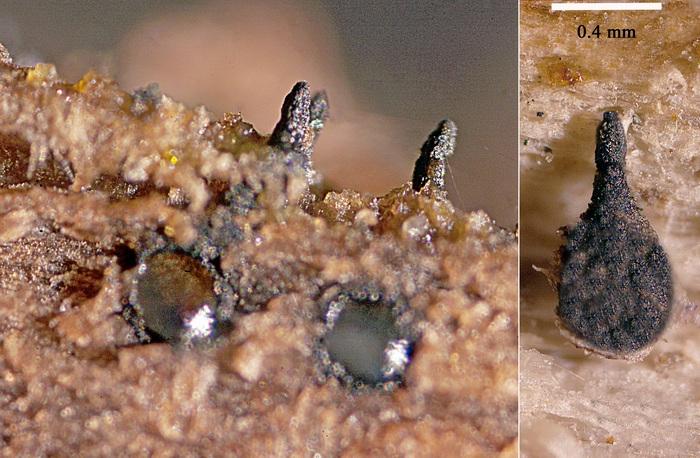
I'd like to know your opinion about this 'ceratostomelloid' fungus growing on rotten wood of Fagus sylvatica. The beaked, scattered, glabrous, inmersed perithecia are up to 1 mm high with only the long necks erumpent across the surface.
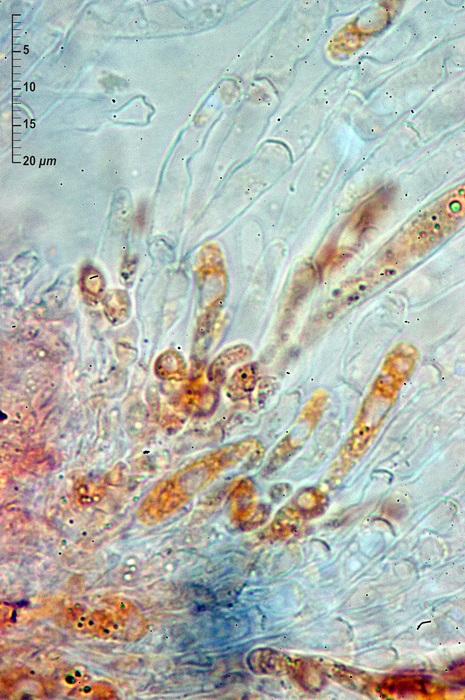
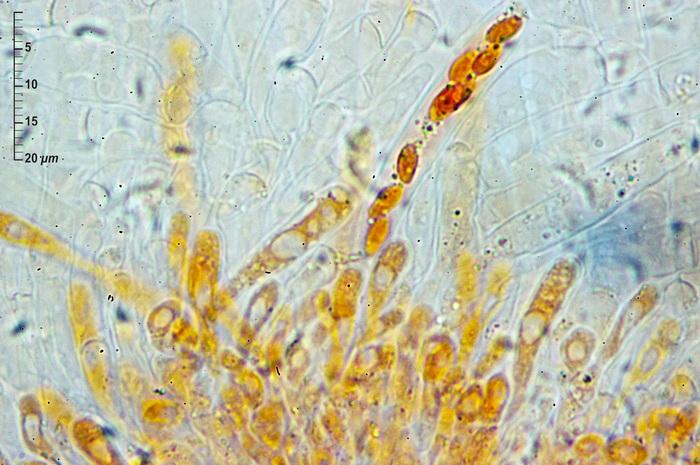
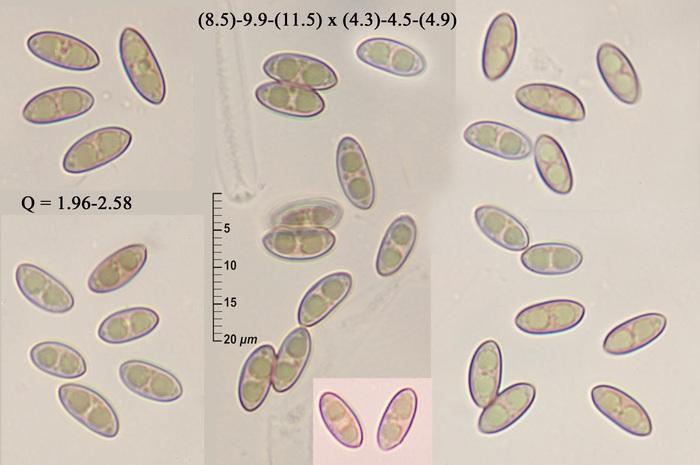
The asci are cylindrical, shortly stipitate, 63-85 x 6-7 microns, with an conspicuous apical apparatus IKI negative and 8 ascospores obliquely uniseriate. Paraphyses septate tapering at the end. Ascospores 8.5-11.5 x 4.3-4.9; Q = 1.96-2.58, allways 2-guttulate, smooth, maybe porate (?).
I think this fungus agrees better with Xylomelasma than Ceratostomella. What do you think?
Thanks again
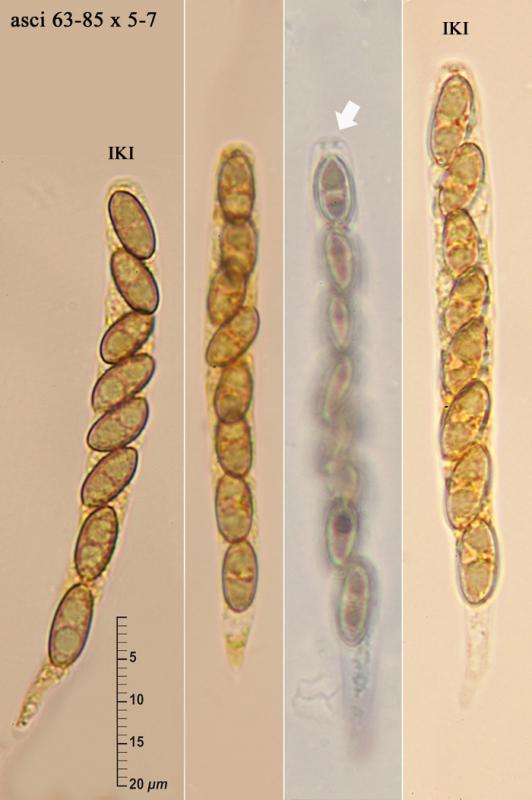
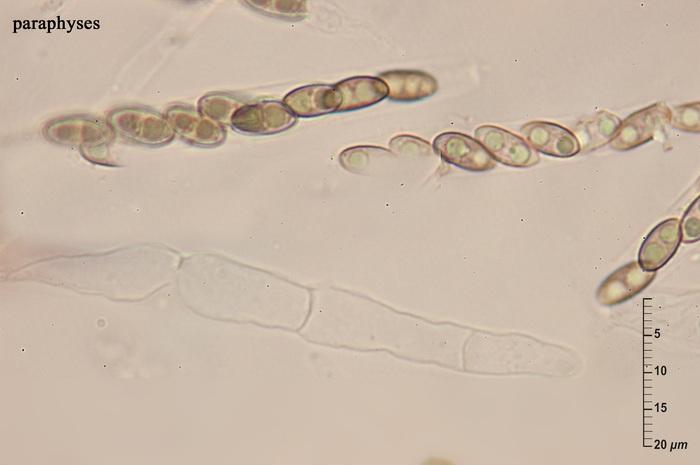

Xylomelasma sordida seems to be a good match. Did you observe the peculiar ascogenous cells at the base of the asci, as described by Réblova? You have to make a very thin slide to see them, hard job!
Saludos,
Jacques
Bonsoir Jacques
It's really hard! Because the interascal tissue is dense and very little congophilous
Thanks gain!